In 1842, the U.S. government passed the Armed Occupation Act to encourage the colonization of South Florida. This law granted settlers 160 acres of land as long as they resided there for five years, built a house, cleared five acres, and served in the militia if necessary. Attracted by this offer, pioneers arrived in the area that would become Manatee. The first settlers, Josiah and Mary Gates, sailed six miles east to a location on the south bank of the river near present-day East 15th Street. Gates had decided to settle there in 1841 and returned a year later with his family to found the town of Manatee. Despite numerous obstacles, by 1855 enough settlers had followed Gates into the region to justify the creation of a new county. Manatee County, at its creation, encompassed 5,000 square miles, extending from the Gulf of Mexico to Lake Okeechobee. Over time, six other counties separated from this original territory. The first to secede was DeSoto County in 1887, encompassing the area that would later become DeSoto, Highlands, Glades, Hardee and Charlotte counties. In 1921, Sarasota residents petitioned the state legislature to create their own county.
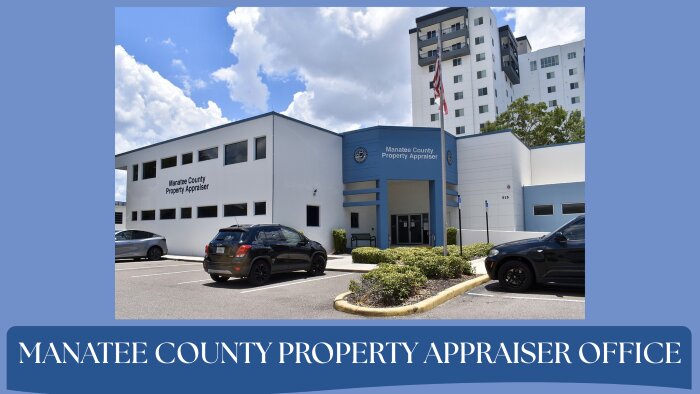 Although the Circuit Court Clerk’s Office and Manatee County Property Appraiser Comptroller’s Office operate with modern efficiency, rigorous financial management, and advanced technology, they are housed in the historic county courthouse, built in 1912. Its construction took just sixteen months, making it one of the first reinforced concrete buildings in Bradenton. At that time, the county jail was on the fourth floor, and the building was crowned with a dome. The dome was demolished in 1925 due to fire risks, and the building was expanded to the south in 1966.
The Florida Supreme Court has sanctioned electronic access to court records and files, as well as images of non-confidential court documents, through this website. Accessing images of public documents no longer requires a subscription or login. Florida law restricts access to certain records, documents, and information depending on the type of case and the user. For example, public access to juvenile criminal records is prohibited in Florida, except for law enforcement. Lawyers and other interested parties, however, have expanded access to their own records. To learn more about electronic access to court records, click here.